
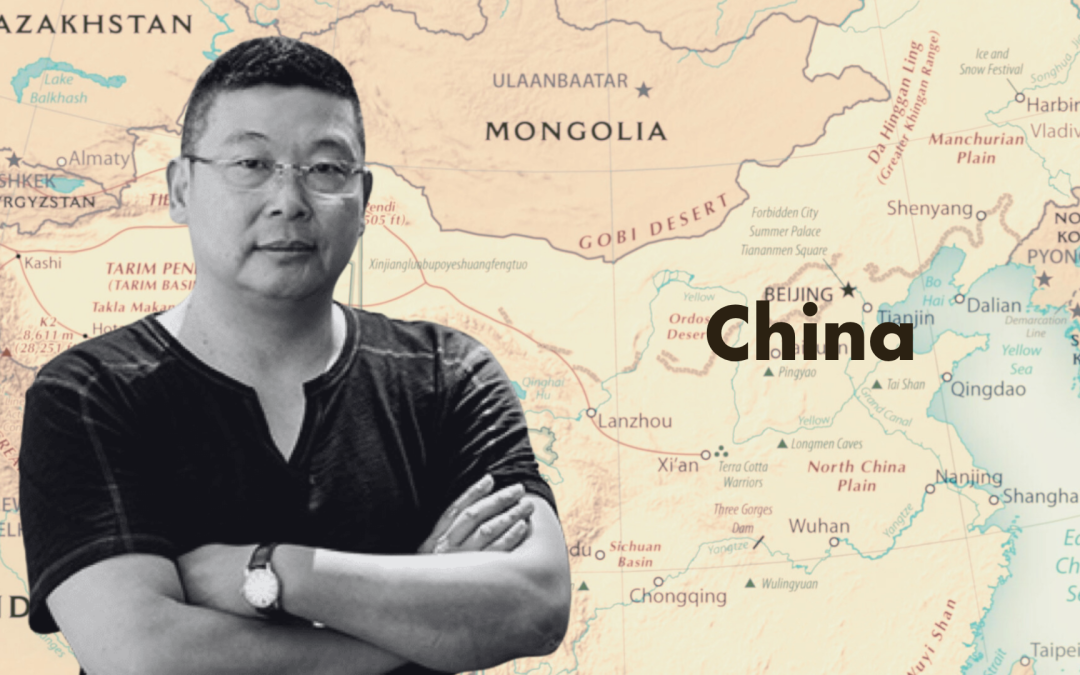
Dr. Yang Jianli is internationally renowned for his efforts to promote democracy in China. He has been involved in the pro-democracy movement in China since the 1980s and was forced to flee China in 1989 after the Tiananmen Square massacre. He holds PhDs in mathematics from the University of California at Berkeley and in political economy and government from Harvard University’s Kennedy School of Government.
Dr. Yang is one of approximately 50 expatriate Chinese dissidents who was “blacklisted” by the Chinese government and not allowed to enter China. Challenging this unacknowledged blacklist, Dr. Yang entered China on April 19, 2002, to observe labor unrest in the country and was detained by Chinese authorities several weeks later. He was held incommunicado.
On May 13, 2004, after being held in an illegal detention five months beyond the deadline under Chinese law for the court to issue a judgment, the Chinese government announced a guilty verdict and sentenced Dr. Yang to five years in prison for espionage and illegal entry.
Freedom Now coordinated an extensive campaign for Dr. Yang’s release that involved providing testimony to the Canadian House of Commons; holding a candlelight vigil next to the Embassy of China in Washington, DC; securing resolutions in the U.S. House of Representatives and the U.S. Senate; generating press interest; and coordinating a letter from 159 members of the U.S. Congress.
Dr. Yang was released on April 27, 2007. On August 18, he returned home to his wife and two children in Boston.
Dr. Yang went on to found Citizen Power Initiatives for China and remains active in the China pro-democracy movement. His work has been published in the Washington Post, the National Review, and The Hill, among other outlets. He is the recipient of multiple awards including Harvard KSG Alumni Achievement Award, UN Watch Human Rights Award and Truman-Reagan Medal of Freedom, Dr. Yang represented Liu Xiaobo at the 2010 Nobel Peace Prize Ceremony.
In 2020, Dr. Yang applied for United States citizenship but was rejected due to his former membership in the Chinese Communist Party. In response, he sued the federal government, which agreed to make him eligible to apply for citizenship again in four years.