
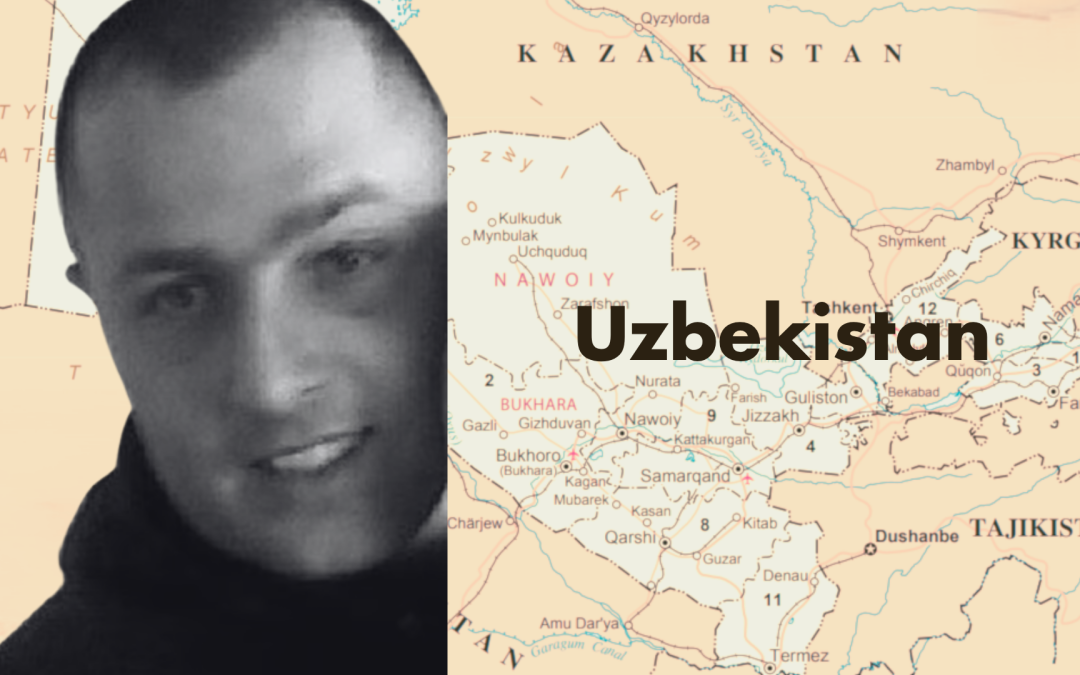
In September 2015, the U.S. Embassy in Tashkent, Uzbekistan received a visitor with a simple plea. She wanted to be put in touch with Freedom Now to help her son, Aramais Avakyan.
Aramais was the owner of a fish farm in Jizzakh, a city of about 200,000 in eastern Uzbekistan. In late 2015, the mayor of Jizzakh repeatedly threatened Aramais to relinquish his business. When Aramais refused he was arrested with several other men and accused on planning to carry out an Islamic jihad allegedly according to text messages he sent. The only issue was that Aramais was a well-known practicing Christian and that the text messages had been sent days after he was arrested.
The State Department connected us with Aramais’s mother who requested we become directly involved in the case. It was an atypical case for us. Aramais was not imprisoned for his human rights activities, but rather the victim of a personal vendetta. Yet, the scale of the injustice could not be ignored. We agreed to take on the case.
The first time Aramais’s family saw him after his arrest was at a court hearing on January 6, 2016. His hands were bruised; he had visibly suffered significant weight loss, and was barely able to stand. He had to be brought to court on a stretcher because he had a broken leg. A month later Aramais was convicted of “plotting anti-constitutional activities” and sentenced to seven years in prison.
In February 2017, Freedom Now submitted a petition to the UN Working Group on Arbitrary Detention on behalf of Avakyan. In May 2017, the Working Group found his detention to be in violation of international law and called for Uzbekistan to immediately release him.
Freedom Now brought international attention to Avakyan’s case by issuing a report to the UN Human Rights Council prior to Uzbekistan’s universal periodic review. We held several meetings with Uzbekistani government officials about the case as well, all of whom expressed shock at how a local mayor appeared to be abusing his powers.
Avakyan was released from prison on February 1, 2020 after serving more than four years of his sentence. We helped secure funding to help him reacclimate back into society and address the various health issues that arose while he was imprisoned.