
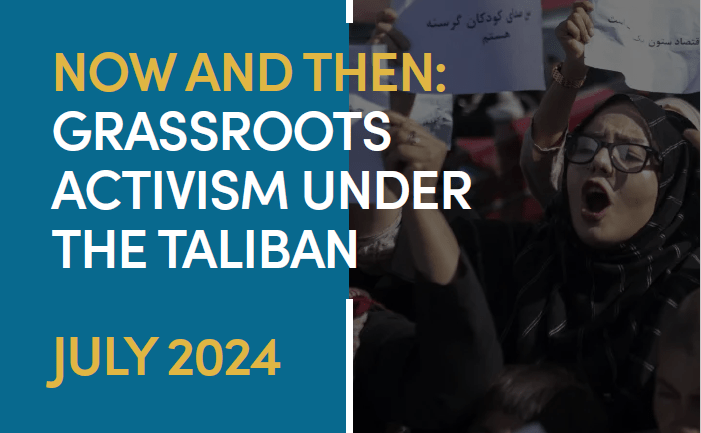
Washington, DC – Grassroots organizations are successfully operating in Afghanistan and playing a crucial role in advocating for women’s rights, social justice and education for girls, despite numerous challenges posed by the Taliban’s hostile stance towards civil society, said Freedom Now and Hogan Lovells in a new report released today.
Development of a vibrant civil society was considered one of the key achievements of the international community and previous governments of Afghanistan between 2002 and 2021. In those two decades
Afghan civil society operated within a security, governance, and funding environment that allowed it to grow and flourish. However, the return of the Taliban to power ushered in new restrictions on civil and political life. As a result, formal civil society structures have effectively collapsed, leaving remaining civil society and new grassroots movements to undergo considerable changes, both in terms of composition and activities.
Now and Then: Grassroots Activism Under the Taliban explores these dramatic changes and investigates the ways in which civil society has adapted to this new repressive environment and has continued to promote human rights and social justice in spite of Taliban repression. The report is based on interviews with current and former members of Afghan civil society and comprehensive research on domestic and international law related to civil society in the country.
“The state of civil society has changed dramatically in Afghanistan in the past three years,” said Freedom Now’s Executive Director Andrea J. Prasow. “Nearly 60% of organizations operating in Afghanistan did not exist before 2021 and more than 75% are women-led, a likely response to the Taliban’s increasing restrictions on women. While these organizations are doing indispensable work and elevating marginalized voices, their leaders and members face considerable personal risk and constant threat of arrest.”
In the context of this increasingly fraught environment, the report calls on donors, international organizations, foreign governments, and other stakeholders to support Afghan grassroots activists and ensure these essential movements continue operating. The authors outline several recommendations which include providing dedicated funding for capacity-strengthening; engaging grassroots organizations in program planning and decision-making; exerting pressure on the Taliban to lift restrictions on civil society; promoting protection of civic actors; and facilitating the safe relocation of activists in danger.
“Grassroots civic organizations are vital agents of positive change, embodying the spirit of activism and community engagement,” said Sina Hekmat, a partner with Hogan Lovells. “The international community must provide these brave activists the necessary support to amplify their impact. Doing so will contribute to the advancement of human rights, social justice and sustainable development in communities around the world.”
Summary of report in English
Summary of report in Pashto – د راپور لنډیز په پښتو ژبه
Full report in Pashto – بشپړ راپور په پښتو ژبه
Summary of report in Farsi – خلاصه گزارش به زبان فارسی
Full report in Farsi – گزارش کامل به زبان فارسی