
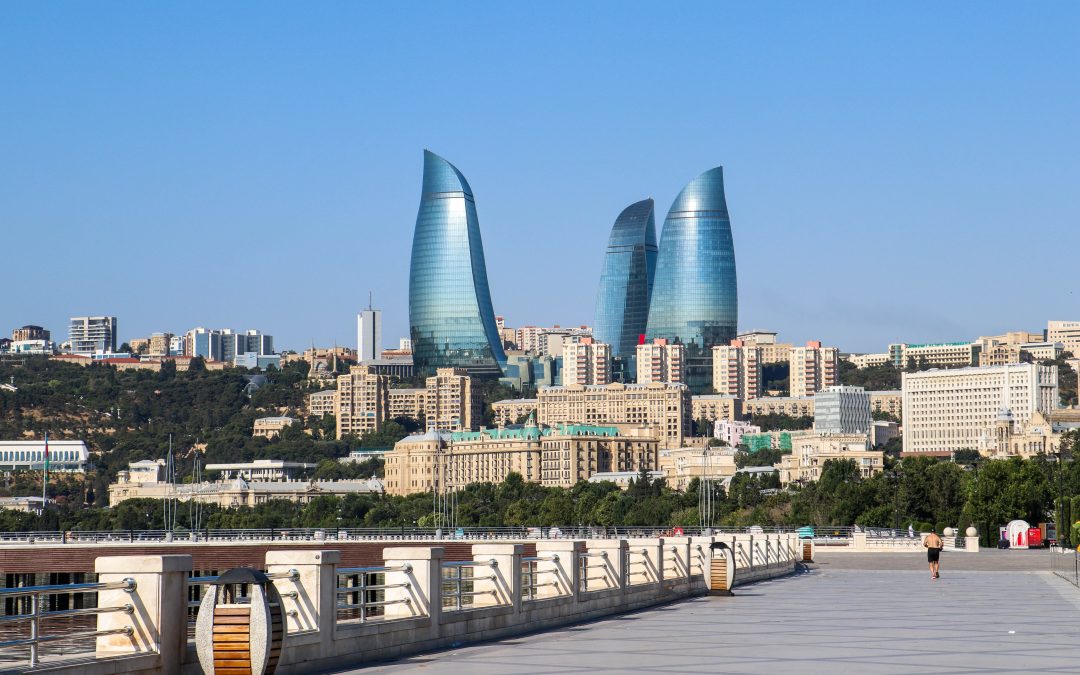
September 2025 – A coalition of human rights groups has written to the International Association of Judges (IAJ) ahead of its annual meeting in Baku, Azerbaijan, calling for a strong resolution on the country’s lack of judicial independence and ongoing repression.
Dear Mr. President,
We, the undersigned human rights groups that strive for justice, the rule of law, and human rights, respectfully but urgently ask the International Association of Judges (IAJ) to pass a strong resolution concerning systemic issues and the State’s worrying lack of judicial independence that directly causes serious harm to human rights and the rule of law in the country. In Azerbaijan, the lack of judicial independence that is heavily impacted by executive branch interference facilitates acquiescence to political persecution and widespread crackdown on dissent. This call is especially timely given the IAJ’s forthcoming annual meeting in Baku, Azerbaijan, in October 2025.
While the decision to convene the Association’s annual meeting in Baku may provide an opportunity for direct engagement, it also places a significant responsibility on the IAJ to confront the reality of the host country’s flawed judicial system. For years, reports from credible human rights organizations have highlighted a stark picture of a country where the fundamental right to a fair trial is routinely violated, and politically motivated prosecutions for the exercise of freedom of expression are persistent. The UN Committee Against Torture’s recent findings showed judicial harassment, torture, and ill-treatment of lawyers, journalists and human rights defenders. The July 3, 2024, public statement of the Council of Europe’s Committee for the Prevention of Torture condemned Azerbaijan’s refusal to cooperate amid systemic torture allegations and impunity.
In a number of cases concerning political persecution of human rights defenders and other government critics, the European Court of Human Rights has found that the domestic courts systematically failed to protect applicants against arbitrary arrest and continued pre-trial detention, limiting their role to one of mere automatic endorsement of the prosecution’s applications to detain without genuine judicial oversight.
Local human rights groups report that the number of political prisoners has risen sharply in the last few years, reaching 375 individuals by 2025, which indicates the alarming trend of repression. Between January and June 2025 alone, 32 members of civil society, media, and the political opposition were criminally charged in politically motivated cases, with many placed under pre-trial detention, house arrest, or subjected to search warrants in absentia.
The Parliamentary Assembly of the Council of Europe has highlighted independence of the judiciary as an area of very serious concern regarding Azerbaijan’s compliance with its Council of Europe commitments. The government of Azerbaijan systemically fails to implement the judgments of the European Court of Human Rights (ECtHR), ranking among the ‘worst’ implementers in the Council of Europe. As of early 2025, out of 69 leading judgments (those that address systemic, structural problems) issued to date, at least 74% remain unimplemented, with at least 80% of them pending from the last 10 years. Violations concerning the right to a fair trial and the right to liberty are among the most commonly found violations in cases against Azerbaijan, forming around 50% of all the Azerbaijani cases before the European Court of Human Rights (ECtHR). In its role supervising the implementation of ECtHR judgments, the Committee of Ministers has identified political influence of the executive over the judiciary and the prosecution among the key systemic problems to be addressed in Azerbaijan.
Independent civil society and media face severe repression, with many actors imprisoned or forced into exile. In its resolution of 19 December 2024, the European Parliament strongly condemned ongoing human rights violations and the intensifying crackdown on independent civil society and media groups in Azerbaijan, and called for the release of political prisoners.
The Azerbaijani authorities have deliberately crafted a legal framework that is not human rights compliant, including through amendments to NGO laws and the Media Law, to criminalize the activities of independent groups. The judiciary and the legal profession are politicized and used as instruments of state repression. This is evident in fabricated charges and a lack of due process. Independent voices are routinely silenced by specious and politically motivated persecution, and the judiciary frequently fails to maintain objectivity in examining evidence, instead often merely endorsing the prosecution’s demands. Lawyers who defend political prisoners are typically subjected to harassment and denial of access to their clients. The lack of due process has been documented by local and international human rights groups in the cases of Anar Mammadli, Akif Gurbanov, Gubad Ibadoghlu, AbzasMedia, Toplum TV, Meydan TV, and many others.
The International Association of Judges cannot remain silent in the face of such flagrant abuses, which the Azerbaijani judiciary fails to rectify. As an organization dedicated to upholding judicial independence and the rule of law, you have a unique and powerful platform to:
- Condemn the undue influence of the executive on the judicial system that results in the abuse of the right to a fair trial and serves as a repression tool against government critics. In several instances, the judges faced retaliation for rendering decisions perceived as not serving the government’s interests. Based on Article 11 of IAJ’s Constitution, a strong condemnation is necessary considering the Azerbaijani authorities’ reliance on presidential pardons rather than genuine judicial reform, and their refusal to acknowledge the “politically motivated misuse of the criminal justice system.”
• Condemn the lack of independence of the judiciary in Azerbaijan, which results in the inability to challenge repressive laws in the Constitutional Court of Azerbaijan and stifles civil society and independent media. For years, international and local human rights groups have raised concerns about the lack of an effective check on the law and the executive actions.
• Urge the Azerbaijani authorities’ full cooperation with international monitoring mechanisms, including the Council of Europe bodies, to ensure the implementation of all outstanding judgments of the ECtHR. - Pursuant to Article 13 of IAJ’s Internal Regulations, expedite the IAJ’s monitoring process. The dire human rights situation in Azerbaijan and the ongoing issues undermining the fair trial principles should be formally examined and addressed using this mechanism. This process ought to incorporate active advocacy for the independence of the judiciary in the country.
At this critical juncture, a resolution from the International Association of Judges would make it clear that the politicization of justice and the violation of human rights will not be ignored. It would offer hope to those unjustly imprisoned and courage to those who continue to advocate for human rights in Azerbaijan.
The signatories:
- Campaign to End Repression in Azerbaijan
- European Human Rights Advocacy Centre
- European Platform for Democratic Elections
- European Exchange
- Freedom Now
- Independent Lawyers’ Network
- Norwegian Helsinki Committee
- Open Azerbaijan Initiative
- People in Need
- The International Commission of Jurists
- Samed Rahimli